
Hysterectomy, Hysteria, and the “Wandering Uterus”
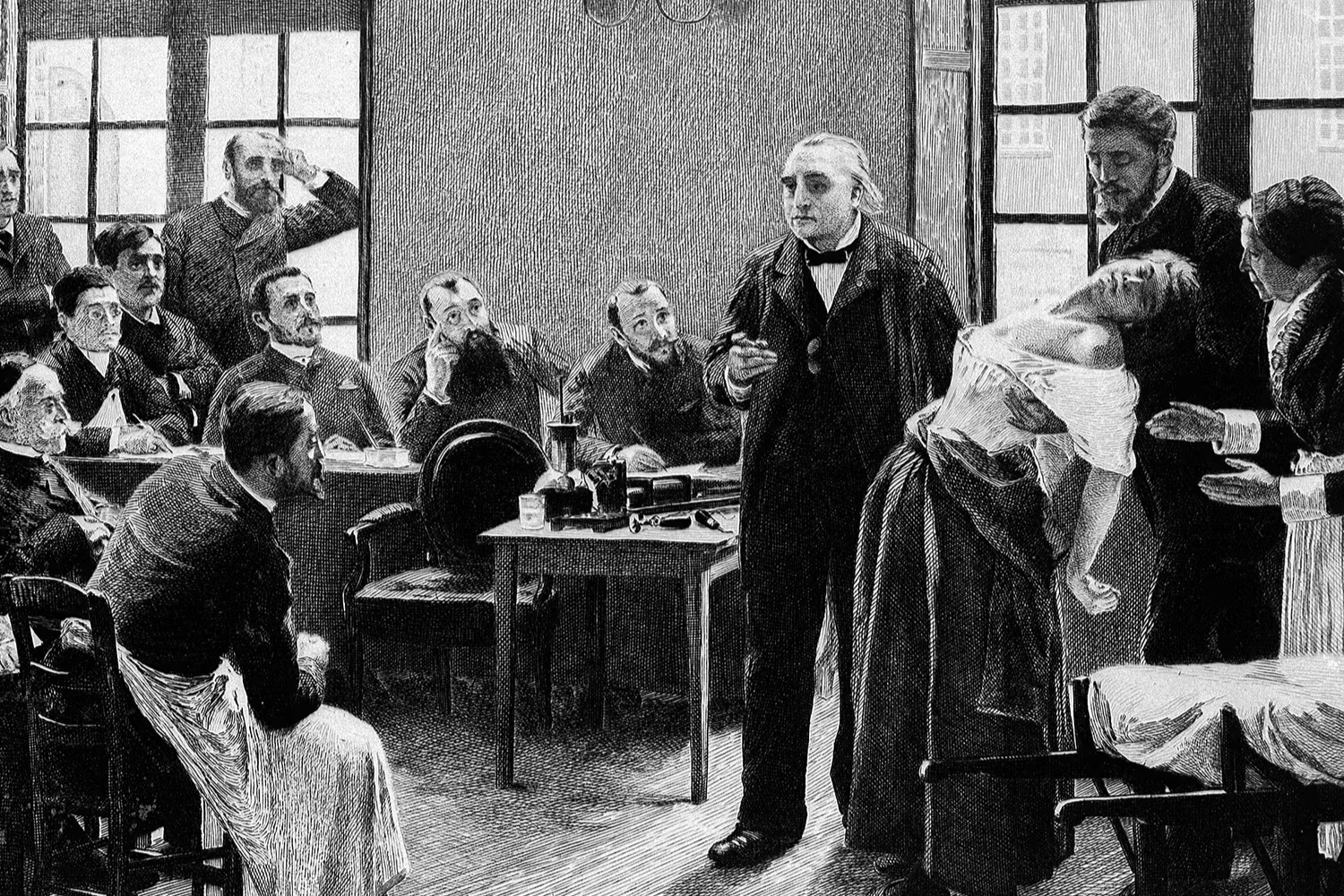
Hysteria, the Uterus, and the Long History of Calling Women Hysterical
The word hysteria didn’t emerge from nowhere; it comes from the ancient Greek word hystera, meaning uterus. That linguistic root carries a much larger story—one about how women’s bodies have long been misunderstood, pathologized, and controlled.
For centuries, medicine and society believed that women’s reproductive organs were responsible for their emotions, behaviors, and perceived instability. To be anxious, angry, fatigued, or in pain was not understood as a human experience shaped by environment, stress, or circumstance. It was framed as a biological failure—something inherently wrong with being female.
Women were often said to “develop hysteria” because they failed to fulfill their expected roles: marrying, bearing children, and remaining emotionally compliant. Any deviation from those expectations could be labeled irrational, unstable, or excessive.
The idea that women are “hysterical” did not disappear with time. It simply evolved—shifting language while preserving its power.
The Wandering Uterus
In ancient Greek medicine, male physicians believed that many forms of women’s emotional and physical distress—symptoms such as anxiety, irritability, breathlessness, and fainting—were caused by a so-called “wandering uterus.”
According to this theory, when a woman had not borne children, her uterus was thought to be “empty” and therefore free to move throughout the body, pressing on other organs and disrupting emotional balance.
Within this framework:
Emotional changes were treated as uterine problems
Mental distress was seen as reproductive dysfunction
A woman’s body—not her lived experience—was blamed
These beliefs connected physical organs with emotional states in a way that specifically tied women’s mental health to reproductive anatomy. The prescribed “treatments” were not care, but control: marriage, pregnancy, sexual activity, and childbirth.
Women were not treated as people responding to their environments. They were treated as bodies malfunctioning.
Hysteria as a Medical Diagnosis
Hysteria is widely regarded as the first mental disorder historically attributed to women, with records dating back more than 4,000 years.
Over time, it became what historians have described as “a dramatic medical metaphor for everything men found mysterious or unmanageable in women.” It functioned as a catch-all diagnosis applied to women’s real, lived experiences—without a clear definition or consistent criteria.
That ambiguity was not accidental. Almost any behavior that fell outside expectations of obedience, calmness, or femininity was deemed hysteria. Sadness, anger, fatigue, anxiety, sexual desire, infertility, and grief were all attributed to reproductive dysfunction or a “wandering uterus,” rather than acknowledged as legitimate human responses.
The supposed cure was to marry quickly and have children. Other treatments ranged from invasive physical interventions to pelvic massages intended to induce orgasm, under the belief that doing so would “release excess fluid.”
In this way, hysteria was not only a medical label. It was a moral judgment—one that reinforced rigid gender roles and punished women who failed to conform.
Contemporary Context: Hysteria Lost Its Name but Not Its Power
Hysteria no longer appears in diagnostic manuals and the wandering uterus no longer exists as a line item in medical school syllabi, but the reflex to question women’s credibility—particularly when they describe pain—remains embedded in clinical culture.
The modern version does not attribute distress to a migrating organ. It instead manifests in far subtler forms: shortened appointments, reassurance without investigation or outright dismissal. Symptoms are often recategorized as stress, hormones, anxiety, or lifestyle factors. The threshold for intervention rises just high enough to normalize suffering—suggesting that for women, pain and discomfort is simply a byproduct of existing in a female body.
What endures is not the theory of the wandering uterus, but the hierarchy of credibility it produced.
Women continue to be asked, implicitly and explicitly, to prove that their pain is real before it is treated as worthy of care.
The Modern Dismissal of Women’s Pain
This pattern is made visible in routine reproductive care. Myriad patients are told that IUD insertion involves only “mild discomfort,” despite documented reports of severe pain. The long-standing claim that the cervix lacks meaningful pain receptors circulates widely, shaping expectations before the procedure even begins. When patients anticipate pain, they are described as nervous. When they experience pain, they are told it is brief. When they ask for anesthesia, they are often denied it.
Outside of contraception, the pattern persists. Endometriosis takes years to diagnose. Chronic pelvic pain is frequently attributed to psychological distress before structural causes are ruled out. Heavy bleeding is dismissed as inconvenient rather than investigated as pathological. Patients who return repeatedly are described as anxious, dramatic, or difficult rather than persistent.
These clinical patterns are reinforced upstream. For decades, women were excluded from clinical trials. Research on menstrual and endometrial disorders has been chronically underfunded relative to prevalence and impact. Conditions that primarily affect women are routinely framed as quality-of-life issues rather than urgent medical concerns. When the evidence base is thin, clinicians are left with fewer diagnostic tools, fewer treatment protocols, and fewer incentives to intervene early. Structural neglect becomes clinical hesitation.
The “Whiny Woman” and Policing of Credibility
Alongside these clinical patterns sits a powerful cultural shorthand: the “whiny woman.”
Women who articulate pain are framed as oversensitive
Women who track symptoms are framed as obsessive
Women who advocate for intervention are framed as demanding
The stereotype does quiet work. It disciplines tone. It narrows what is considered credible. It suggests that emotional expression and physical pain are inseparable—and therefore suspect. Although hysteria was formally removed from the Diagnostic and Statistical Manual of Mental Disorders in 1980, its logic persists. The diagnosis disappeared; the dismissal did not.
The historical framework of hysteria cast women’s bodies as unstable and unreliable. Contemporary medicine rarely states that outright. Instead, instability is relocated to perception: the pain is subjective, the reaction disproportionate, the concern premature.
Reclaiming Language, Reclaiming Care
Language reflects culture. Medical language, in particular, reveals whose bodies are trusted and whose are questioned.
The word hysteria tied women’s emotional and physical experiences directly to their reproductive anatomy, shaping centuries of care—and harm. That history is why there is growing discussion around replacing hysterectomy with the term uterectomy: language that describes the removal of the uterus without invoking a legacy that pathologized women’s bodies and emotions.
Changing terminology alone will not dismantle bias. But language shapes expectations, and expectations shape care. Reckoning with the history of hysteria is not about rewriting the past. It is about recognizing how deeply it shaped the present—and refusing to let it define the future.
Women were never hysterical. They were responding to pain, pressure, inequality, and lived experience.
Healthcare rooted in trust, consent, and evidence begins by listening—and by believing women when they speak.
Sources:
Yale School of Medicine: From hysteria to empowerment
Literary Hub: Hysteria, Witches, and The Wandering Uterus: A Brief History
National Library of Medicine: Women And Hysteria In The History Of Mental Health
