
Women’s History Month: Honoring the Trailblazers in Healthcare
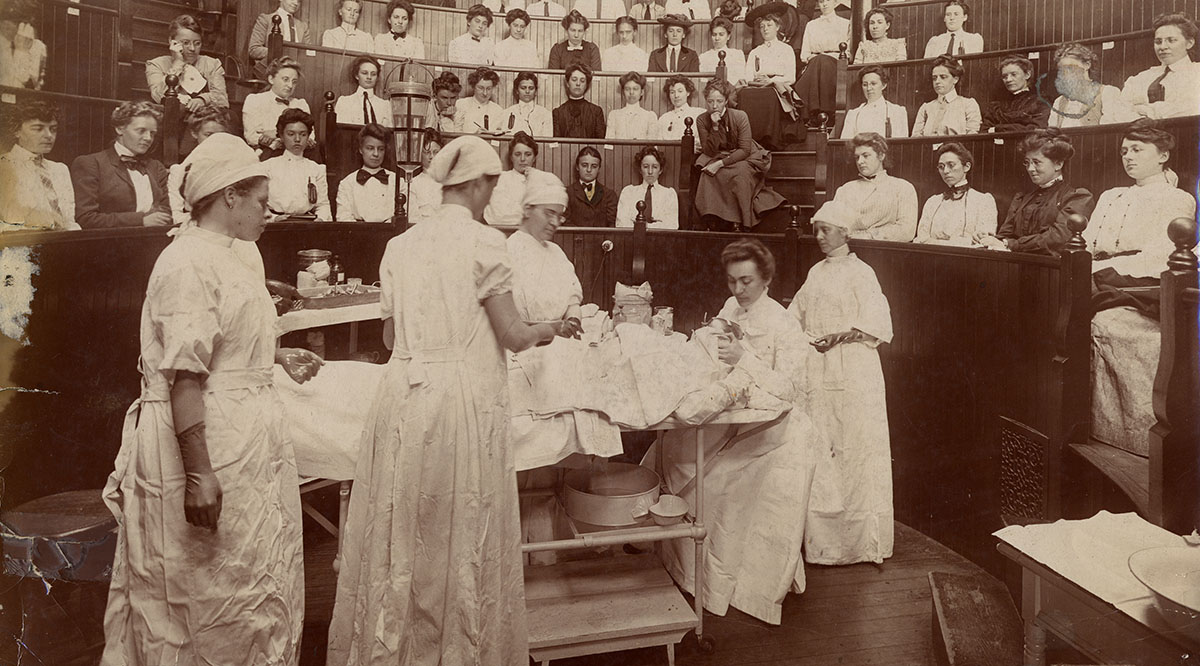
The Women Who Changed Healthcare
March is Women’s History Month—a time to reflect, to honor, and to tell the stories that too often go untold.
Healthcare, as we know it today, would not exist without women. And yet, for much of history, women were excluded from the very systems they would go on to transform. They were denied education, turned away from institutions, and told they didn’t belong. Still, they persisted.
Today, women make up the majority of the global healthcare workforce, holding nearly 70% of the roles worldwide. But representation alone doesn’t tell the full story. The foundation of modern medicine was built by women who pushed against barriers that were never meant to be broken.
This month and always, we honor the women who didn’t just enter healthcare, but redefined it.
Florence Nightingale (1820-1910)
The Founder of Modern Nursing
Florence Nightingale is widely recognized as the founder of modern nursing, but her impact extends far beyond bedside care. During the Crimean War, she introduced rigorous sanitation practices—improving ventilation, cleanliness, and nutrition—which led to a dramatic reduction in mortality rates among soldiers.
She also pioneered the use of statistical graphics, including her famous “coxcomb” diagrams, to demonstrate how preventable many deaths were. This was one of the earliest examples of using data to influence healthcare policy and reform. After the war, she established the Nightingale Training School for Nurses, helping formalize nursing as a respected, skilled profession.
She transformed care into a science—and proved that data can drive systemic change.
Elizabeth Blackwell (1821–1910)
The First Woman Physician in the U.S.
Elizabeth Blackwell became the first woman in the United States to receive a medical degree in 1849—after facing widespread rejection from medical schools. Her acceptance to Geneva Medical College was reportedly decided as a joke by male students, underscoring the barriers she faced.
Despite facing discrimination from professors and students, she graduated first in her class. Later, she went on to co-found the New York Infirmary for Women and Children. This institution not only provided care to underserved populations but also created training opportunities for women in medicine, becoming the first hospital in the U.S. to employ an entirely female medical staff.
Elizabeth and her sister Emily (the third woman to receive a medical degree) founded their own medical school, further expanding access to medical education for women.
She didn’t just break into medicine—she changed it, opening doors for generations of women physicians.
Rebecca Lee Crumpler (1831–1895)
The First Black Woman Physician in the U.S.
Rebecca Lee Crumpler earned her medical degree in 1864, becoming the first Black woman physician in the United States. She graduated just as the Civil War was ending, a time when both racism and sexism deeply limited access to care and opportunity.
She dedicated much of her work to caring for formerly enslaved people in the post-war South, providing essential medical care to communities that had been systematically denied it. Despite her credentials, she faced intense racism and sexism from both patients and fellow physicians. Some pharmacists even refused to fill prescriptions written by her. Yet she never let this stop her.
Crumpler also authored A Book of Medical Discourses in 1883—the first medical text written by a Black physician—focused on maternal and child health.
Her work represents medicine as a tool for equity, care, and justice.
Mary Putnam Jacobi (1842–1906)
A Physician Who Challenged Menstruation Myths
Mary Putnam Jacobi was a physician, educator, and researcher who challenged deeply rooted misconceptions about women’s health. She became the first woman admitted to the École de Médecine in Paris and later built a distinguished career in the United States.
Her most notable work directly refuted the widespread belief that menstruation made women physically and intellectually unfit for education or professional work. Through rigorous scientific research, she demonstrated that these claims had no medical basis. Her work helped push medicine toward evidence instead of assumption.
Her paper, “The Question of Rest for Women During Menstruation,” won Harvard’s Boylston Prize in 1876, making her the first woman ever to receive the award.
She used science to dismantle bias and challenged how medicine understood women’s bodies.
Susan LaFlesche Picotte (1865–1915)
The First Native American Woman Physician
Susan LaFlesche Picotte became the first Native American woman to earn a medical degree in 1889. She returned to the Omaha Reservation, where she provided care to over 1,200 patients—often walking miles to reach those who otherwise had no access to care.
She advocated for prenatal care, sanitation, and disease prevention, recognizing that community health began long before illness appeared. She was a pioneer in public health, and knew that healthcare meant more than treating disease. In 1913, she helped open a hospital on the Omaha Reservation, expanding access to care for Native patients who had long been underserved.
Her work was deeply rooted in serving her community with cultural understanding and respect, and stands as an early model of community-centered medicine and health equity.
Virginia Apgar (1909–1974)
The Creator of the Apgar Score
Virginia Apgar revolutionized neonatal care with the development of the Apgar Score in 1952. This quick, standardized assessment evaluates a newborn’s health using five criteria: heart rate, respiration, muscle tone, reflex response, and color.
Before this tool, there was no consistent way to assess newborns immediately after birth—meaning critical signs of distress were often missed. The Apgar Score changed that. It allowed providers to quickly identify infants in need of care and intervene in time.
She transformed critical moments into actionable care—saving countless newborn lives.
Later, she earned a Master of Public Health from Johns Hopkins University, using her platform to raise awareness around birth defects and improve maternal and infant health outcomes.
She has been credited with doing more to improve the health of mothers, babies, and unborn infants than anyone else in the 20th century.
Gerty Theresa Cori (1896–1957)
A Nobel Prize–Winning Pioneer in Metabolism
Gerty Theresa Cori was a biochemist who became the first woman in the United States to win a Nobel Prize in Physiology or Medicine in 1947.
Her research, conducted with her husband Carl Cori, led to the discovery of the “Cori cycle,” which explains how the body converts glycogen into glucose and back again. This work was foundational in understanding metabolic processes and diseases such as diabetes.
Despite having the same education and research experience as her husband, she was repeatedly offered lower-ranking positions solely because of her gender. Even as their work gained recognition, she was often excluded from opportunities and accolades readily given to male scientists. It wasn’t until she received the Nobel Prize that she was finally appointed a full professor at Washington University—after years of being limited to roles such as research associate and associate professor.
She didn’t just advance science—she did so while navigating a system that consistently underestimated her. Her work reshaped our understanding of human metabolism and opened the door for future breakthroughs in disease treatment.
Antonia Novello (b. 1944)
The First Woman and First Hispanic U.S. Surgeon General
She used her platform to amplify public health—and advocate for those too often overlooked.
Dr. Antonia Novello became the first woman and first Hispanic Surgeon General of the United States in 1990.
During her tenure, she focused on public health issues affecting vulnerable populations, including children, low-income communities, and those living with HIV/AIDS. She also brought national attention to critical issues such as underage smoking and access to care.
Her leadership emphasized prevention, education, and equity—building on her earlier work at the National Institutes of Health.
She used her platform to elevate public health and advocate for communities too often overlooked.
Jocelyn Elders (b. 1933)
A Champion for Preventative Care and Equity
Dr. Jocelyn Elders became the first Black U.S. Surgeon General in 1993 and the second woman to hold the role.
Raised in rural Arkansas, she didn’t see a doctor until she was 16—an experience that shaped her decision to pursue medicine. After serving in the U.S. Army, she attended medical school through the GI Bill, graduating as the only woman in her class. She later became the first board-certified pediatric endocrinologist in Arkansas.
Before her national role, Elders led the Arkansas Department of Health, where she expanded prenatal care, increased childhood immunization rates, and improved access to care for underserved populations.
As Surgeon General, she became known for her candid, prevention-focused approach—advocating for comprehensive sex education and greater access to reproductive healthcare. Her willingness to speak openly challenged norms and reshaped public health conversations.
She pushed healthcare to be proactive, honest, and equitable—centering prevention and access for those too often overlooked.
Looking Forward
These women didn’t just contribute to healthcare. They reshaped it.
They entered spaces that were never designed for them, challenged systems that tried to exclude them, and created opportunities where none existed. Because of their persistence, medicine became more inclusive, more innovative, and more representative of the people it serves.
And yet, the work is not finished. Women continue to face barriers in leadership, research, and recognition across the healthcare field. Their stories are not just history—they are a reminder of what is possible, and of what still needs to change.
At Comma, we believe progress in healthcare starts with access, equity, and the courage to challenge the status quo. Because the future of healthcare depends on who is allowed to shape it—and whose voices are given the space to lead.
Sources:
National Women’s History Museum: Biographies
AIMS Education: Females in Healthcare History
The Association of American Medical Colleges: Celebrating 10 women medical pioneers
ChenMed: Trailblazers in Healthcare: A Historical Timeline of Women Pioneers
